
Artificial intelligence, commonly called AI, is technology designed to complete tasks that usually require human thinking. Artificial intelligence can recognise patterns, analyse large amounts of information, respond to questions, and make recommendations.
You may already use AI through predictive text, online shopping suggestions, voice assistants, chatbots, translation tools, and spam filters. The Age-Friendly AI materials explain that AI works by learning patterns from large amounts of data, including text, images, audio, and video.
Read the Introduction to Artificial Intelligence Training Presentation
View the Age-Friendly AI Glossary
AI in Everyday Life
AI can appear in many services and devices that people use every day, including:
- Voice assistants
- Predictive text
- Online shopping recommendations
- Navigation services
- Smartwatches
- Customer-service chatbots
- Email spam filters
Voice assistants such as Siri, Alexa, and Google Assistant can respond to spoken requests, set reminders, play music, provide information, and assist with everyday routines. Age-Friendly AI also notes that these tools may support independent living, although they can raise privacy questions about how voice information is collected and stored.
Read the Quick Guide to Voice Assistants
How to Recognise AI-Generated Images
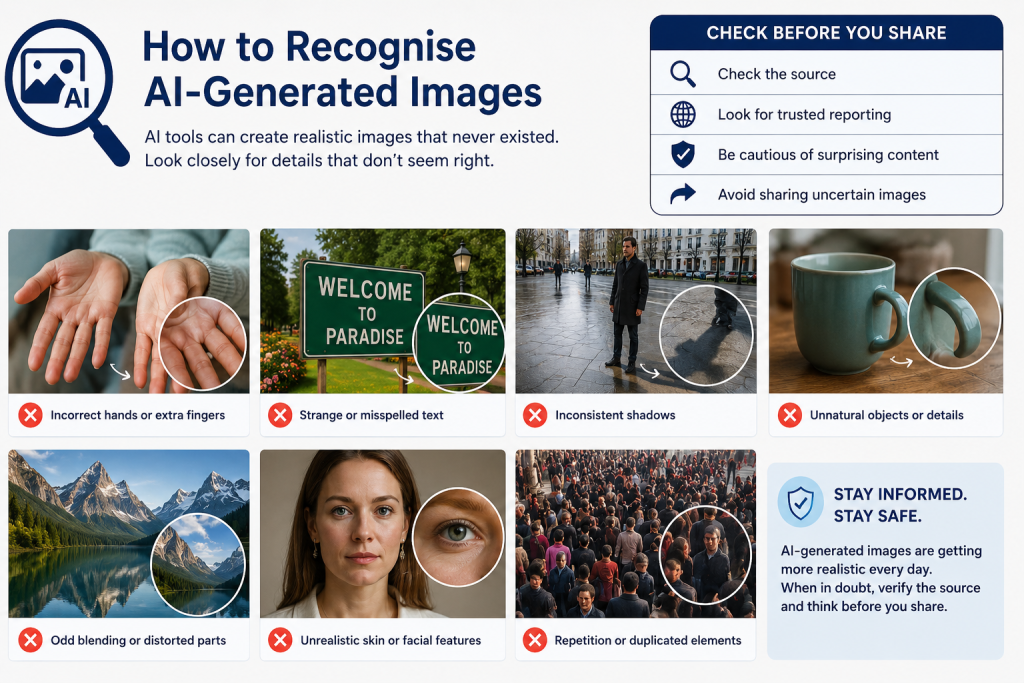
AI tools can create realistic images of people, places, and events that never existed. These images may sometimes include unusual details, such as incorrect hands, strange text, inconsistent shadows, or objects that do not look natural.
However, AI-generated images are becoming more convincing, so visual errors may not always be easy to identify. It is important to check the original source, look for trusted reporting, and avoid sharing uncertain content immediately.
Read the Art or AI Guide to Generated Images
AI, Misinformation and Online Safety
AI-generated text, images, audio, and videos can sometimes spread false or misleading information. Some content may be shared accidentally, while other material may be deliberately created to deceive people.
Before believing or sharing unusual online content:
- Stop before reacting.
- Think about who created it.
- Check the information using trusted sources.
- Look for the same story on reliable websites.
- Be cautious when content creates fear or pressure.
The Age-Friendly AI training materials recommend staying informed and keeping a real person involved when AI is used for important decisions. They describe this as keeping a “human in the loop.”
Read the related story:
Real-Life Story about AI and Misinformation
AI and Personal Information
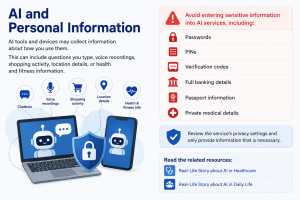
AI-powered devices and services may collect information about how people use them. Depending on the service, this could include questions entered into a chatbot, voice recordings, shopping activity, location details, or health and fitness information.
Avoid entering sensitive information into AI services, including:
- Passwords
- PINs
- Verification codes
- Full banking details
- Passport information
- Private medical details
Review the service’s privacy settings and only provide information that is necessary.
Read the related resources:
Real-Life Story about AI in Healthcare
Real-Life Story about AI in Daily Life